
Omron Blood Pressure Monitors: A Comprehensive Guide
Omron provides reliable at-home monitoring, eliminating frequent doctor visits, particularly beneficial for individuals managing existing health conditions, as detailed in their manuals.
What is Omron and Why Choose Their Blood Pressure Monitors?
Omron Healthcare is a global leader renowned for producing innovative, clinically backed medical devices, with a strong emphasis on cardiovascular health. For decades, they’ve been dedicated to empowering individuals to manage their well-being proactively. Choosing an Omron blood pressure monitor means selecting a brand consistently recommended by healthcare professionals.

Their devices offer accuracy and reliability, crucial for effective home monitoring, as thoroughly explained within each Omron blood pressure manual. This allows users to track readings conveniently, avoiding frequent trips to the doctor’s office, especially vital for those with pre-existing conditions. Omron prioritizes user-friendly designs and advanced technology.
Understanding Blood Pressure and Home Monitoring
Blood pressure, measured in millimeters of mercury (mmHg), reflects the force of blood against artery walls. It consists of two numbers: systolic (when the heart beats) and diastolic (between beats). Regular home monitoring, facilitated by devices like Omron blood pressure monitors, empowers individuals to understand their cardiovascular health trends.
The Omron blood pressure manual stresses the importance of consistent monitoring for early detection of hypertension or hypotension. Home monitoring, when performed correctly, provides a more comprehensive picture than occasional clinical readings. It allows for tracking the effectiveness of lifestyle changes or medication, promoting proactive health management and informed discussions with healthcare providers.
Types of Omron Blood Pressure Monitors Available
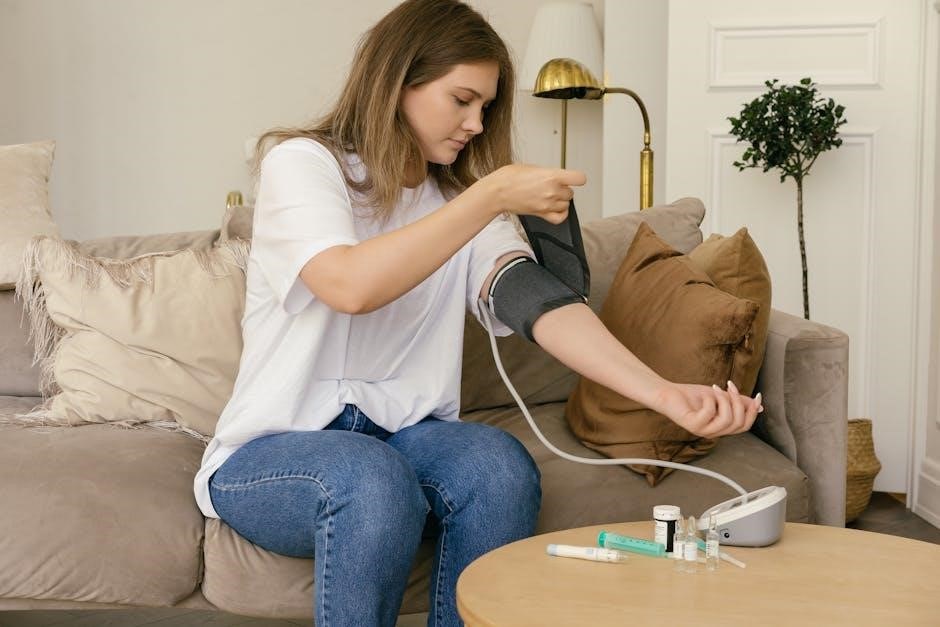
Omron offers a diverse range of blood pressure monitors to suit individual needs, as detailed in their product manuals. These broadly fall into three categories: upper arm, wrist, and connected (Bluetooth) models. Upper arm monitors, traditionally favored for accuracy, utilize a cuff placed around the upper arm. Wrist monitors provide convenience and portability, ideal for travel.
Omron’s connected monitors sync data wirelessly to smartphones or computers, enabling easy tracking and sharing with physicians; The manual highlights that choosing the right type depends on factors like lifestyle, arm size, and desired features. Each model boasts varying functionalities, from simple readings to advanced data analysis.
Upper Arm Blood Pressure Monitors
Omron’s upper arm blood pressure monitors, as explained in their manuals, are widely considered the gold standard for accuracy. These devices utilize a cuff that wraps around the upper arm, providing a stable and reliable reading. Models range from basic, easy-to-use options to advanced versions with features like irregular heartbeat detection and multiple user profiles.
Omron manuals emphasize the importance of correct cuff size for optimal results. These monitors are suitable for most individuals, but proper arm circumference measurement is crucial. They are often recommended by healthcare professionals for consistent and dependable blood pressure tracking at home.
Wrist Blood Pressure Monitors
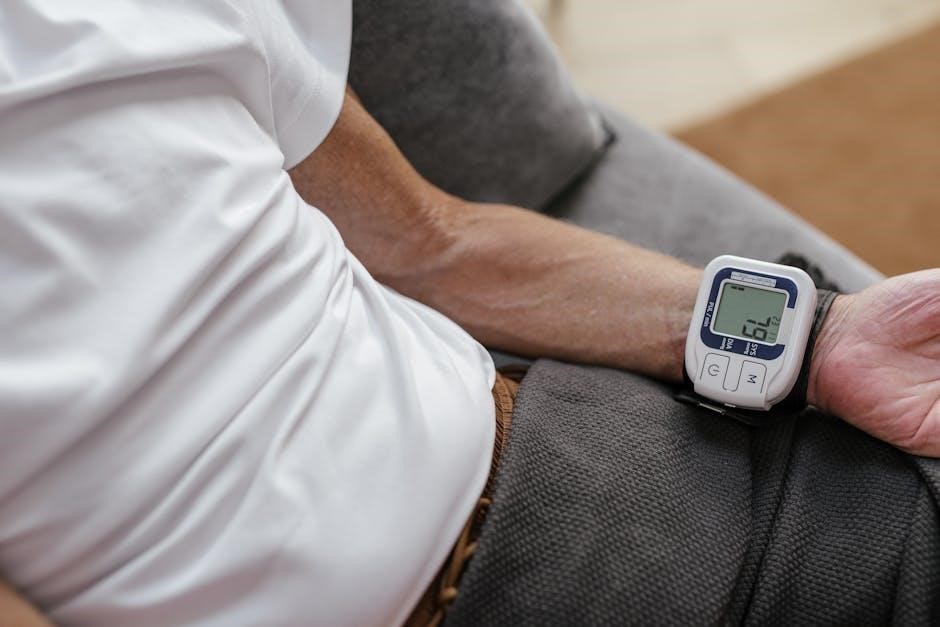
Omron wrist blood pressure monitors, detailed in their user manuals, offer convenience and portability. These devices are ideal for individuals who find upper arm cuffs uncomfortable or for those who travel frequently. However, the Omron manual stresses the importance of maintaining proper wrist positioning during measurement – at heart level – for accurate readings.
Omron’s wrist monitors often feature advanced technologies like motion detection to minimize errors. While convenient, the manual notes they may be less suitable for individuals with certain medical conditions. Careful adherence to the instructions provided is vital for reliable blood pressure monitoring.

Bluetooth & Connected Monitors
Omron’s Bluetooth-enabled and connected blood pressure monitors, as explained in the detailed product manuals, seamlessly sync data to smartphones and tablets via the Omron Connect app. This allows for easy tracking of readings over time, identifying trends, and sharing information with healthcare providers. The manual emphasizes the importance of downloading and correctly setting up the app for optimal functionality.
These monitors often include cloud storage for data backup and analysis. Omron’s manual guides users through the pairing process and troubleshooting common connectivity issues, ensuring a smooth and reliable data transfer experience for comprehensive health management.
Key Features to Look For in an Omron Monitor
Omron blood pressure monitor manuals highlight several key features to consider when choosing a device. Accuracy, validated through clinical testing, is paramount, as detailed in the documentation. Look for models with irregular heartbeat detection, a crucial feature for identifying potential cardiac issues. The manual stresses the importance of cuff size selection for accurate readings.
Memory capacity for storing previous readings is also vital for tracking trends. Connected models with Bluetooth syncing, explained in the manual, offer convenient data management. Finally, user-friendly interfaces and clear display readings contribute to ease of use and reliable self-monitoring.
Accuracy and Validation
Omron blood pressure monitor manuals consistently emphasize the importance of accuracy, stating their devices undergo rigorous clinical validation. This validation, often detailed within the manual’s specifications, ensures readings align with established standards. The manuals explain that Omron participates in independent validation programs, demonstrating a commitment to reliable results.
Users are advised to follow the manual’s instructions precisely for proper cuff placement and body positioning, as these factors significantly impact accuracy. Regular calibration isn’t typically required, but the manual stresses checking the device against a professional reading periodically.
Cuff Size and Fit
Omron blood pressure monitor manuals dedicate significant attention to cuff size, stressing its critical role in accurate readings. The manual details how an improperly sized cuff – too small or too large – can lead to falsely elevated or lowered blood pressure measurements. Charts within the manual guide users to select the correct cuff based on arm circumference.
Instructions emphasize ensuring the cuff wraps snugly, but not tightly, around the upper arm. The manual illustrates proper positioning, typically one inch above the elbow. Incorrect fit is a common source of error, so careful adherence to the manual’s guidelines is vital.
Memory and Data Storage
Omron blood pressure monitor manuals thoroughly explain the memory functions available on various models. Many devices store multiple readings, allowing users to track trends over time. The manual details how to access stored data, often through a simple recall button or a connected smartphone application.
Instructions clarify the memory capacity of each monitor, and how readings are averaged or stored with timestamps. Some manuals describe features like guest mode, enabling multiple users to track their readings on a single device. Proper understanding of these features, as outlined in the manual, is key to effective blood pressure management.
Setting Up Your Omron Blood Pressure Monitor
Omron blood pressure monitor manuals provide clear, step-by-step instructions for initial setup. This typically begins with unpacking the device and identifying all components – the monitor, cuff, and any included accessories. The manual guides users through proper battery installation, specifying the correct battery type and polarity.
It also details connecting the cuff to the main unit, ensuring a secure fit. Many manuals include diagrams illustrating the correct connections. Before taking a first reading, the manual advises familiarizing yourself with the monitor’s buttons and display, preparing for accurate and consistent measurements.
Battery Installation and Power Source
Omron blood pressure monitor manuals emphasize the importance of correct battery installation for accurate readings. Most models require standard AA or AAA batteries, with the manual clearly indicating the quantity and type needed. It details the battery compartment location and proper polarity alignment – matching the positive (+) and negative (-) ends.
The manual also notes that low batteries can affect accuracy, prompting users to replace them when the low battery indicator appears. Some Omron monitors offer an optional AC adapter as an alternative power source, detailed within the manual’s specifications.
Cuff Placement and Positioning
Omron blood pressure monitor manuals provide detailed instructions on proper cuff placement, crucial for accurate measurements. The manual stresses positioning the cuff on a bare upper arm, approximately one inch above the elbow. It illustrates correct wrapping – snug, but not too tight – ensuring the artery marker aligns with the brachial artery.
The manual also advises supporting the arm at heart level during measurement and avoiding talking or movement. Incorrect positioning, as detailed in troubleshooting sections, can lead to inaccurate readings, so careful adherence to the manual’s guidance is vital.
Taking Accurate Blood Pressure Readings
Omron’s blood pressure monitor manuals emphasize preparation for accurate readings. Before measurement, users should rest quietly for five minutes, avoid caffeine, smoking, and exercise. The manual details a step-by-step process: sit comfortably with back supported, feet flat on the floor, and arm at heart level.
The manual instructs users to remain still and silent during inflation and deflation. It highlights the importance of following the on-screen prompts and avoiding anxiety, as these factors can elevate readings. Consistent adherence to these guidelines, as outlined in the manual, ensures reliable results.
Preparation Before Measurement
Omron’s blood pressure manual stresses the importance of a calm environment and proper body positioning. Users are advised to avoid caffeine, alcohol, and smoking for at least 30 minutes before measurement. Empty your bladder and rest quietly for five minutes to ensure accurate results, as detailed in the manual.
The manual further instructs to sit comfortably with your back supported and feet flat on the floor. Ensure your arm is bare and supported at heart level. Avoid talking or moving during the process. Following these preparatory steps, as outlined in the Omron manual, maximizes reading reliability.
The Measurement Process – Step-by-Step
Omron’s manual guides users through a simple process: power on the monitor and attach the cuff correctly, ensuring proper alignment with your upper arm. Remain still and quiet during inflation. The cuff will automatically inflate and then deflate while the monitor records your blood pressure, as detailed in the manual.
The Omron manual emphasizes reading the displayed values for systolic and diastolic pressure, alongside your pulse rate. Record these readings for tracking purposes. Repeat the measurement after a short interval if desired, following the manual’s recommendations for consistent and reliable data collection.

Understanding Your Readings: Systolic, Diastolic, and Pulse Rate
Omron’s manual clearly defines systolic pressure as the force when your heart beats, representing the highest value in a reading. Diastolic pressure, as explained in the manual, is the force when your heart rests between beats, showing the lower value. Your pulse rate indicates how many times your heart beats per minute.
The Omron manual stresses that understanding these three components provides a complete picture of your cardiovascular health. Regularly monitoring and recording these values, guided by the manual, allows for effective tracking and informed discussions with your healthcare provider regarding any potential concerns.

Interpreting Your Blood Pressure Results
Omron’s manual provides a clear guide to interpreting your readings, categorizing blood pressure levels for easy understanding. Normal blood pressure, as defined in the manual, is generally considered below 120/80 mmHg. Elevated readings warrant attention, and the manual details stages of hypertension, explaining the risks associated with each level.
The Omron manual emphasizes that consistent monitoring and accurate record-keeping are crucial for identifying trends. It strongly advises consulting a doctor for any consistently high readings or concerns, as self-diagnosis can be inaccurate. The manual serves as a valuable tool for proactive health management.
Normal Blood Pressure Ranges
Omron’s blood pressure manual clearly defines normal ranges, stating that a healthy reading typically falls below 120/80 mmHg. This signifies optimal cardiovascular health, according to the guidelines presented within the manual. Systolic pressure, the top number, represents pressure during heartbeats, while diastolic, the bottom number, indicates pressure between beats.
The manual further clarifies that these ranges can vary slightly based on individual factors. It stresses the importance of consistent monitoring to establish a personal baseline. Omron emphasizes that understanding these ranges empowers users to proactively manage their health and identify potential concerns early on.
Hypertension Stages and What They Mean
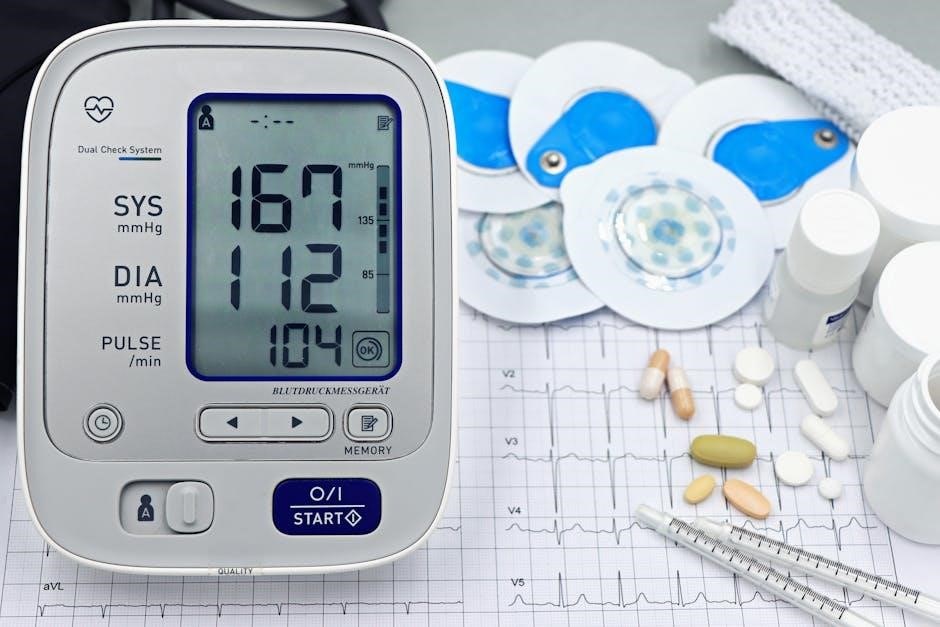
Omron’s blood pressure manual details hypertension stages, explaining elevated blood pressure (120-129/ <80 mmHg) requires lifestyle changes. Stage 1 hypertension (130-139/80-89 mmHg) may necessitate medication, while Stage 2 (140+/90+ mmHg) almost always requires treatment.
The manual stresses that hypertension often has no symptoms, making regular monitoring crucial. It clarifies that uncontrolled high blood pressure significantly increases the risk of heart disease, stroke, and kidney failure. Omron emphasizes consulting a healthcare professional for accurate diagnosis and personalized management plans based on these stages.
When to Consult a Doctor
Omron’s blood pressure manual advises consulting a doctor if readings consistently exceed 140/90 mmHg, indicating potential hypertension requiring medical intervention. Seek immediate medical attention for readings above 180/120 mmHg, potentially signaling a hypertensive crisis.
The manual also recommends consulting a physician if you experience symptoms like severe headaches, nosebleeds, or vision changes alongside elevated readings. Regular check-ups are vital even with consistent, normal readings, to monitor overall cardiovascular health. Omron stresses that self-diagnosis is insufficient; professional evaluation is crucial for accurate assessment and treatment.
Troubleshooting Common Issues with Omron Monitors
Omron’s blood pressure manual details solutions for frequent errors. “Err” messages often indicate improper cuff placement or movement during measurement; re-apply the cuff correctly. Inconsistent readings may stem from incorrect cuff size – consult the manual for proper fitting.
If the monitor displays unusual symbols, the manual provides a comprehensive error code list explaining each issue. Low battery power can also cause inaccurate results; replace batteries promptly. For persistent problems not addressed in the manual, Omron recommends contacting their customer support for further assistance and potential repair options.
Error Codes and Their Meanings

Omron blood pressure monitor manuals dedicate sections to deciphering error codes. A common code, “Err 1,” typically signals a measurement error due to movement or a loose cuff. “Err 2” often indicates an irregular heartbeat detected during the reading process. “Err 3” suggests the cuff was inflated for too long, potentially requiring a battery check.
The manual stresses that these codes aren’t necessarily indicative of a serious health issue, but rather a technical problem with the measurement. Referencing the specific code in your Omron manual is crucial for accurate troubleshooting and ensuring reliable blood pressure readings.
Inaccurate Readings – Causes and Solutions
Omron blood pressure manual troubleshooting highlights several causes for inaccurate readings. Movement during measurement is a primary culprit, as is an improperly fitted cuff – too loose or too tight. External factors like talking or crossing legs can also interfere. Low battery power can sometimes lead to unreliable results.
Solutions include ensuring complete stillness, verifying correct cuff size and placement (following the manual’s diagrams), and using fresh batteries; Repeating the measurement a few times, as suggested in the Omron guide, can also help confirm accuracy.
Maintaining and Caring for Your Omron Monitor
Omron’s blood pressure manual emphasizes gentle care for longevity. Avoid exposing the monitor to extreme temperatures or humidity. Cleaning should be done with a soft, dry cloth; never use abrasive cleaners or solvents. The cuff can be gently wiped with a damp cloth if needed.
Proper storage, away from direct sunlight and dust, is crucial. Regularly check the batteries and replace them when low, as indicated in the Omron guide. Avoid dropping or subjecting the monitor to strong impacts, which could damage internal components.
Cleaning and Storage
Omron’s blood pressure manual advises using a soft, dry cloth to clean the monitor’s main unit, avoiding harsh chemicals or solvents. The cuff, if soiled, can be gently wiped with a damp cloth – ensure it’s completely dry before re-use. Regular dusting prevents buildup.

For storage, the manual recommends a cool, dry place, shielded from direct sunlight and extreme temperatures. Avoid storing with sharp objects that could damage the cuff or unit. Proper storage extends the lifespan and ensures accurate readings when the monitor is next used, per Omron’s guidelines.
Battery Replacement
Omron’s blood pressure manual stresses using only the specified battery type – typically AA or AAA – to avoid damaging the device. When the low battery indicator appears, replace the batteries promptly for accurate readings. The manual details the battery compartment location, usually on the back or underside of the unit.
Always insert batteries with correct polarity (+ and -) as indicated. Remove old or depleted batteries immediately to prevent leakage. Omron recommends checking battery contacts periodically for corrosion and cleaning if necessary, ensuring reliable power and consistent performance of your monitor.